Automated product shots
Load thousands of past proofs and generate a product image for every one of them. Real geometry, real substrates, real finishing: rendered in a consistent house style, without a studio or a shoot day.
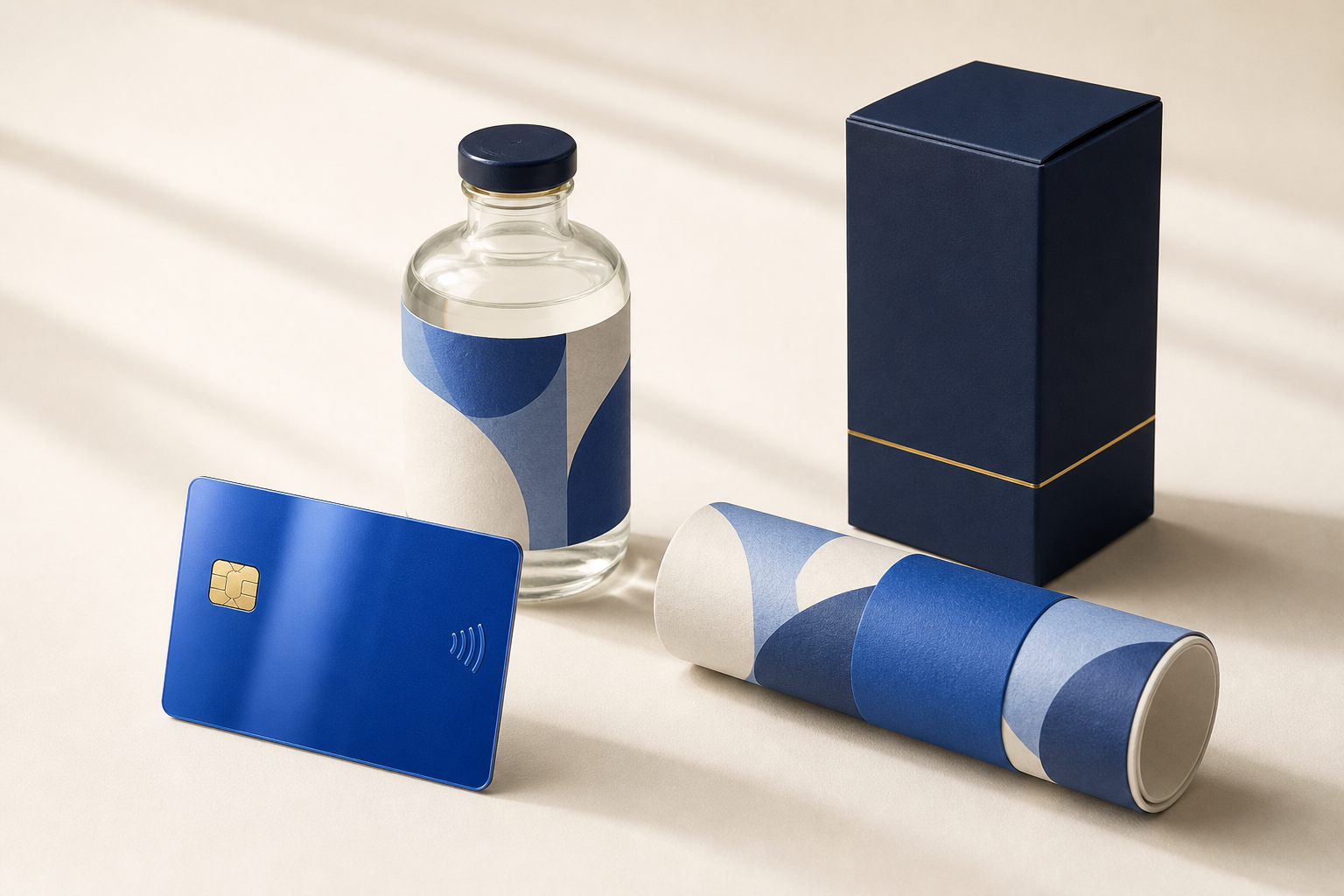
One job is a render. Ten thousand is a marketing department.
Producing a single nice image of a product is not hard. Producing one for every job you have ever run, in one look, is a different problem, and it is the one worth solving.
Bulk, not one-by-one
Point ProofScene at an archive of past proofs and it works through them, producing a product image for each job rather than waiting for you to set each one up.
No photographer, no studio
No sample to retrieve from a warehouse, no set to build, no shoot day to schedule around a press. The artwork you already have is the input.
Consistent across the range
The same lighting, the same background, the same angles across every job, so a catalog page looks like a catalog rather than twelve unrelated photos.
The formats you actually need
Square for a marketplace listing, landscape for a hero, portrait for social, high-resolution for a trade-show panel. Different crops, not different shoots.
Filed by job reference
Every image carries the job number it came from, so a picture can be traced back to the order, the customer and the specification.
Your back catalog, finally visible
Most shops have produced years of good work and have photographs of almost none of it. This is the fastest route to fixing that.
Archive in, image library out
- 01
Load the archive
Bring in a batch of past proofs or press-ready artwork: a folder, a range, a customer, or everything from a given year.
- 02
Set the look once
Choose the lighting environment, background, angles and output sizes. This becomes the house style for the whole run.
- 03
Generate the set
ProofScene renders each job as a product image using its own dimensions, substrate and finishing spec.
- 04
Use them anywhere
Download the set for your website, catalog, quotes, decks and social, or hand a customer the images of their own product.
Four things a print shop cannot currently show
- The capability page nobody could illustrate
- Every print shop has a services page describing folding cartons in words because there is no photograph of one. Now there are three hundred.
- Quotes that show the customer their own product
- Sending a prospect a render of their artwork on the product they asked about is a materially different pitch from sending a spec sheet.
- A social feed that does not run dry
- Consistent product imagery is the content problem that stops most print businesses posting at all. A back catalog solves it in one pass.
- Sales collateral for a new market
- Moving into labels, or promo, or credentials? Generate a credible portfolio for the category from the work you have already done in it.
Rendered images represent appearance, placement, materials and finishing. They are not calibrated contract-color proofs unless a color-managed workflow is used.
Related
Single-product generation, finishing detail, and offering this to your own clients.
Product shots, answered
Short, straight answers to the questions we are asked most. If yours is not here, ask.
Ask us anythingWhat are automated product shots?
Automated product shots are marketing images rendered directly from your existing proofs and artwork, in bulk, without a camera. ProofScene builds each product in 3D from its own specification, applies the artwork, and photographs it virtually in a consistent lighting setup.
Can I really generate images from thousands of old proofs?
That is the intended use. The archive is the asset: every proof in it represents a real product you manufactured. Processing them as a batch turns a dormant folder into a picture library, which is not something a photo shoot can do retrospectively at any sensible cost.
Do the images all look the same?
Deliberately consistent, not identical. You set the lighting, background and angles once so the set hangs together, but each image is the actual product: its real shape, size, substrate and finishing.
Can I publish images of a customer's branded product?
That is a permission question, not a technical one. The images are yours to generate and use commercially, but the brand in the artwork belongs to your customer. Ask before publishing their work: most are pleased to be shown well, and some have contractual reasons to say no.
What quality are the renders?
They are produced at resolutions suitable for web, sales decks, catalogs and print collateral, from the same models used for proofing, so a foil, an emboss or a spot UV panel behaves correctly rather than being faked with a filter.
Is this the same as a proof?
No. A product shot is chosen and lit to look good; a proof has to be honest about every angle. Both come from the same model, but do not send a customer a marketing render and call it a proof.
Are rendered images color accurate?
They represent appearance, placement, materials and finishing. They are not calibrated contract-color proofs unless a color-managed workflow is used, and they should not be presented to a customer as a color reference.
Turn your proof archive into a picture library
ProofScene is opening early access to print shops and product suppliers. Join the list and be first to turn your proof sheets into interactive 3D approvals.
No credit card · Built by print people · Launching soon